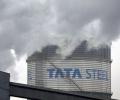
In FY23, Indian operations accounted for 41.6 per cent of the consolidated revenue of India's top five multinationals, up from 34 per cent in FY18 and 33.2 per cent and 34.2 per cent in FY21.

Ola Electric, the SoftBank-backed electric vehicle (EV) maker, is likely to pursue a valuation of approximately $4.5 billion in its upcoming initial public offering (IPO), marking about 18 per cent decrease from its last funding round valuation of around $5.5 billion, according to industry sources. The Bhavish Aggarwal-founded firm aims to file for the IPO by next month, according to people familiar with the matter. "The strategy is to price the IPO attractively for investors, fostering long-term growth and wealth creation," said a source.

'Retail investors, who had not seen such a massive correction in the SMID universe since COVID-19, are witnessing something like this for the first time. Panic profit booking may continue.'

'Though one cannot paint the entire microcap basket with the same brush, investors need to be careful now as to what they're buying.'

From the Sensex firms, Power Grid, NTPC, Tech Mahindra, Bharti Airtel, Tata Motors, IndusInd Bank, Reliance Industries, Kotak Mahindra Bank and Maruti were among the laggards. Asian Paints, Wipro, JSW Steel, Hindustan Unilever, Bajaj Finserv and Mahindra & Mahindra were among the biggest gainers.

Global markets trends, inflation, release of industrial output data and quarterly earnings will dictate movement of the equity benchmarks this week, analysts said, adding that volatility might continue amid slew of announcements of macroeconomic data at the global level too. Moreover, foreign fund movement, crude oil prices and trend in rupee would also act as major drivers for the equity market, they added. "The direction of global equity markets along with movement in dollar index and crude oil prices will continue to dominate while inflation numbers of the USA on May 11 and inflation and IIP numbers of India on May 12 will also cause volatility in the market," said Santosh Meena, head of research, Swastika Investmart Ltd.

Investors' wealth soared by Rs 10.58 lakh crore in three days of the market rally, where the BSE benchmark jumped over 2 per cent, and hit an all-time high on Monday. Extending its winning momentum to the third day running, the 30-share BSE Sensex jumped 363.20 points or 0.49 per cent to settle at 74,014.55. During the day, it zoomed 603.27 points or 0.81 per cent to hit its record high of 74,254.62.

From the Sensex basket, Kotak Mahindra Bank jumped 5 per cent after the company reported a 25 per cent growth in its March quarter net profit at Rs 5,302 crore, limited by a drop in the core income due to narrow interest margins. Tata Consultancy Services, Hindustan Unilever, Mahindra & Mahindra, Sun Pharma, Tech Mahindra and IndusInd Bank were among the other major gainers. Titan tanked 7 per cent after its March quarter earnings failed to cheer investors.

Corporate India is starting to step up its capital expenditure plans amid government incentives and signs of rising demand, company executives and analysts have indicated. This coincides with the Reserve Bank of India (RBI) recently citing a double-digit growth in private capital expenditure. Healthy balance sheets of banks and corporates, along with increasing capacity utilisation and improving business sentiment, are contributing to a favourable environment for sustained growth in private sector investments, the RBI said in its policy last week.

Equity investors suffered a massive loss of Rs 31 lakh crore on Tuesday as markets went into a tailspin with the BSE Sensex tumbling nearly 6 per cent as vote counting trends showed the BJP may not have a clear majority in the Lok Sabha polls. Erasing the record-rally of the previous trade, the 30-share BSE Sensex cracked 4,389.73 points or 5.74 per cent to settle at 72,079.05. During the day, the benchmark tanked 6,234.35 points or 8.15 per cent to hit a nearly five-month low of 70,234.43.

Benchmark Sensex hit the historic 83,000 level for the first time on Thursday and the Nifty settled at a lifetime high after a rally in blue-chip shares, surge in global markets and foreign fund inflows. A sharp fag-end rally drove the 30-share BSE Sensex to the 83,000 level for the first time. The barometer surged 1,593.03 points or 1.95 per cent to hit its lifetime intra-day peak of 83,116.19 in the last hour of trade.

Among the Sensex stocks, JSW Steel, Asian Paints, Maruti Suzuki India, NTPC, Adani Ports and Special Economic Zone, Bharti Airtel, ITC and Tech Mahindra were the major gainers. Reliance Industries, Tata Motors, Infosys, Mahindra and Mahindra, Bajaj Finance and Axis Bank were the laggards.

Nestle, State Bank of India, Power Grid, Tata Steel, Larsen & Toubro and Mahindra & Mahindra were the other major gainers. In contrast, Tech Mahindra, Axis Bank and Reliance Industries were the laggards.
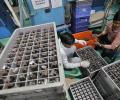
Shares of auto component major, Samvardhana Motherson International, has gained 11.5 per cent on the bourses after the company approved the qualified institutions placement (QIP) issue and announced the calculation methodology for its compulsorily convertible debentures, or CCDs, into equity shares. Analysts cite strong investor response to the issue that has kept the sentiment positive for the stock. Brokerages, however, have a mixed view on the outlook for the auto parts supplier.

Equity mutual funds attracted an all-time high net inflow of Rs 28,463 crore in March, on continued interest by retail and HNI investors, who used market correction as a good buying opportunity.

Foreign portfolio investors (FPIs) have pulled out Rs 17,696 crore from the Indian markets in December so far amid uncertainty due to a new coronavirus strain, Omicron, and expectations of faster tapering by the US Federal Reserve. According to the depositories data, FPIs took out Rs 13,470 crore from equities, Rs 4,066 crore from the debt segment and Rs 160 crore from hybrid instruments between December 1-17. In November, FPIs were net sellers to the tune of Rs 2,521 crore in Indian markets.

From the Sensex basket, Mahindra & Mahindra, Tata Motors, NTPC, HCL Technologies, Larsen & Toubro, Infosys, Tech Mahindra and State Bank of India were the major laggards. Bharti Airtel, Bajaj Finance, Bajaj Finserv, Tata Consultancy Services and IndusInd Bank were among the gainers.
From the Sensex pack, Larsen & Toubro, Bajaj Finserv, Mahindra & Mahindra, UltraTech Cement, State Bank of India, IndusInd Bank, Reliance Industries and Sun Pharma were among the biggest gainers. Bharti Airtel, Titan, ITC, Kotak Mahindra Bank, Tech Mahindra and HDFC Bank were among the laggards.

Benchmark Sensex rose by 443 points to close at a new record high while Nifty settled above the 24,100 mark on Monday on buying in banking and IT shares in line with gains in Asian and European markets. The 30-share BSE Sensex settled higher by 443.46 points or 0.56 per cent at an all-time high of 79,476.19.
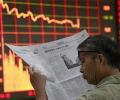
Mid- and small-cap funds dominate the list, opening up opportunity for investors to make contra bets in large-cap funds
The market capitalisation of BSE-listed companies soared to an all-time high of Rs 406.52 lakh crore on Monday thanks to a rally in equities where the BSE Sensex climbed over 1 per cent. The 30-share BSE Sensex rallied 941.12 points or 1.28 per cent to finish at 74,671.28. During the day, it zoomed 990.99 points or 1.34 per cent to 74,721.15.

Continuing their selling spree for the sixth consecutive month, foreign investors pulled out a massive Rs 41,000 crore from the Indian equity market in March on anticipation of rate hikes by the US Federal Reserve and deteriorating geopolitical environment amid the Russia-Ukraine war. Further, flows from foreign portfolio investors (FPIs) are expected to remain volatile in the near term given the headwinds in terms of elevated crude prices and inflation, experts said. According to data available with the depositories, FPIs were net sellers to the tune of Rs 41,123 crore in the equity market last month.

Benchmark BSE Sensex declined for the fourth day in a row on Wednesday due to selling in financial and banking shares and the government's move to hike securities transaction tax and short term capital gains tax. The 30-share BSE Sensex declined 280.16 points or 0.35 per cent to settle at 80,148.88 with 19 of its components closing lower and 11 with gains. During the day, it tumbled 678.53 points or 0.84 per cent to 79,750.51.

The Budget proposals are expected to boost the fortunes of consumer goods and fast-moving consumer goods companies, which have been struggling with poor consumer demand for more than a year. The Budget announcements, such as the increase in standard deduction by Rs 25,000 for income-tax payers and slab revisions, will put more money in their hands, boosting consumer demand. Private consumption is also likely to benefit from a new scheme to offer internships to 10 million youths in the country's top 500 companies.

India's financial sector is dominated by large government-owned and private-sector banks.

'If their allocation to certain segments have become high due to strong returns over the past three-four years, they should rebalance their portfolios and bring them in line with their long-term asset allocation.'


Mutual funds are looking to tap into the special opportunities theme ahead of the results of the general election results and the continued uncertainty on the geo-political and interest rate fronts. Two fund houses - WhiteOak Capital and Samco - are set to launch special opportunities funds next week. Kotak MF has also filed papers with the regulator to launch a scheme in the same category.
Investors' wealth has eroded by over Rs 6.15 lakh crore in three days of market decline amid weak global cues and persistent selling by foreign funds. The BSE benchmark Sensex tumbled for the third straight session on Friday to close at 59,306.93, down 677.77 points or 1.13 per cent. In three days, the 30-share index has lost 2,043.33 points or 3.33 per cent.

Among the 30 Sensex companies, Kotak Mahindra Bank, Asian Paints, Reliance Industries, ITC, Sun Pharma, ICICI Bank, Axis Bank and JSW Steel were the major laggards. Larsen & Toubro, Tata Motors, Maruti, NTPC, Mahindra & Mahindra and UltraTech Cement were among the gainers.

10 non-bank and non-finance stocks from the BSE500 Index universe that offer an optimal blend of low valuation, reasonably robust revenue and earnings growth in recent quarters, a strong balance sheet, and most importantly, positive cash flow from their operations.

Stock markets snapped their five-day losing run on Friday with the benchmark BSE Sensex closing higher by 75 points on value-buying in banking and oil shares after recent losses. The 30-share BSE Sensex rose by 75.71 points or 0.10 per cent to settle at 73,961.31. During the session, it hit a high of 74,478.89 points and a low of 73,765.15 points.

Indian bonds remained volatile over the past week on uncertainties over the maiden offshore sovereign bonds issuance, according to a report by DBS Group Research.

'Investors should not go for lump-sum investments in infrastructure funds at this point.' 'The SIP route is the best to avoid any major disappointment.'
Among the 30 Sensex companies, Hindustan Unilever, Nestle, Asian Paints, HCL Technologies, HDFC Bank, Kotak Mahindra Bank and ITC were the biggest gainers. Larsen & Toubro, Power Grid, NTPC and State Bank of India were among the laggards.

"Less than two week back, we faced a set of allegations from the US about compliance practices. This is not the first time we have faced such challenges. What I can tell you is that every attack makes us stronger," he said addressing the 51st Gems and Jewellery Award in Jaipur.

The bias for the BSE benchmark index, technical charts suggest, is likely to remain bullish as long as the index holds above 75,600 levels for the rest of the year.

Among Sensex firms, HDFC Bank climbed more than 2 per cent. TCS, Maruti, Infosys, Reliance Industries and Bharti Airtel were among the major gainers. State Bank of India, JSW Steel, ITC, Tata Motors, UltraTech Cement and Nestle were among the laggards.

Among the Sensex firms, Tata Motors, Tata Consultancy Services, IndusInd Bank, Power Grid, Bharti Airtel, Sun Pharma, JSW Steel and Tata Steel were the major gainers. On the other hand, Bajaj Finance, State Bank of India, Bajaj Finserv, Axis Bank and NTPC were among the laggards.
From the 30 Sensex pack, State Bank of India, Mahindra & Mahindra, Bharti Airtel, Titan, HDFC Bank, IndusInd Bank, Axis Bank and Bajaj Finance were the biggest laggards. JSW Steel, Tech Mahindra, Larsen & Toubro, Hindustan Unilever, HCL Technologies and Reliance Industries were among the gainers from the pack.
